The Green Guardians blog
Straight-talking guides on solar, batteries, export tariffs, and getting the most from your system — no jargon, no hard sell.
Voltage Optimisers: How They Work & Are They Worth It?
Understanding voltage optimisation, energy savings, and whether it makes sense for your home or business.
As energy prices continue to rise, homeowners and businesses are looking for practical ways to reduce electricity consumption without changing how they use power every day. One technology gaining attention is the voltage optimiser.
At Green Guardians Solar, we often receive questions about whether voltage optimisation can lower energy bills, improve appliance lifespan, and work alongside solar panel systems. Here's what you need to know.
What Is Voltage Optimisation?
Voltage optimisation is an energy-saving technology that regulates the incoming electricity supply to a property. In many cases, the voltage delivered from the grid is higher than what most household appliances actually require to operate efficiently.
A voltage optimiser reduces excess voltage and delivers a more consistent supply to your electrical system. By reducing unnecessary overvoltage, some appliances may use less electricity and experience less wear over time.
How Does a Voltage Optimiser Work?
Electricity supplied in the UK is nominally 230V, but actual grid voltage can fluctuate and may often be higher depending on location and network conditions.
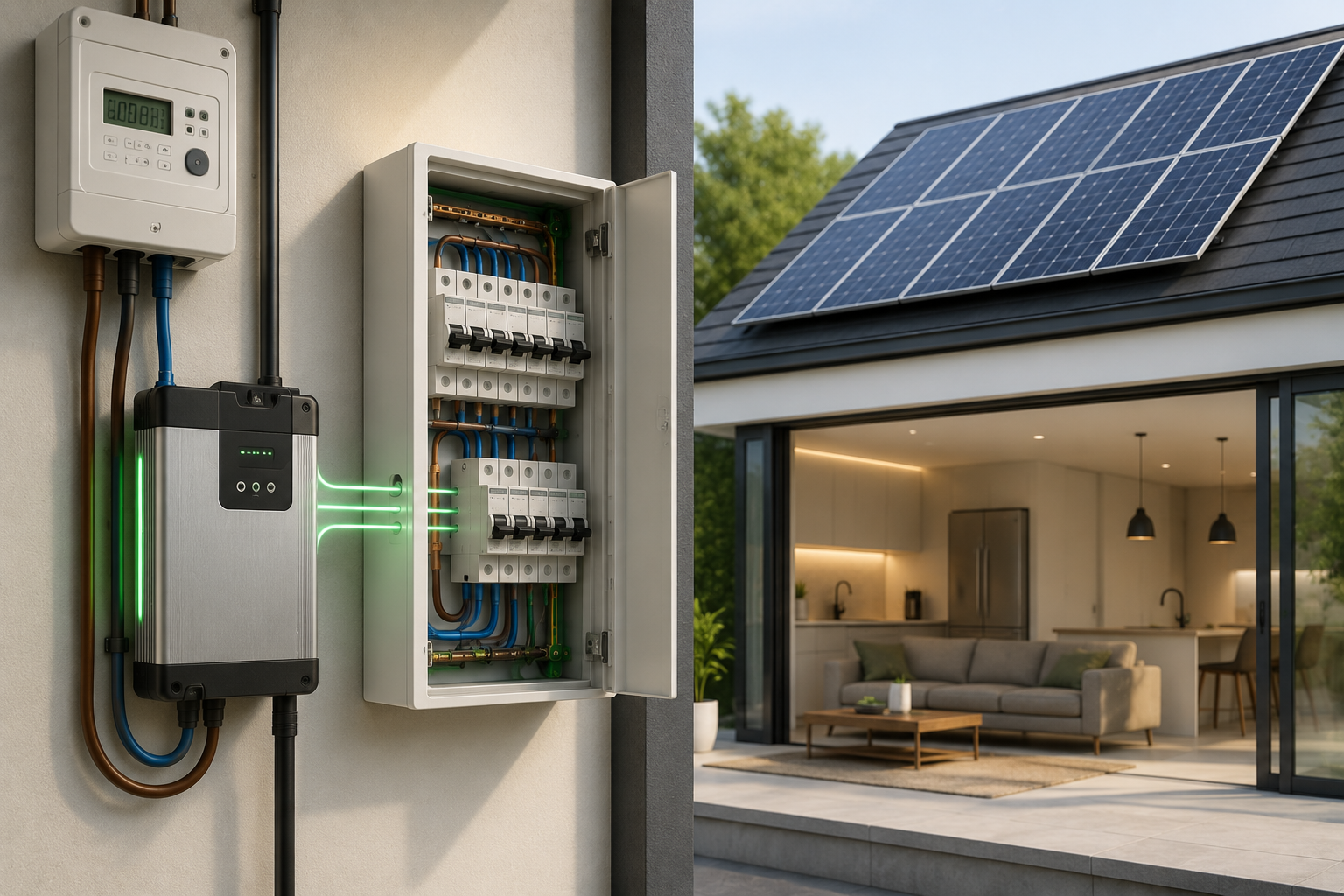
A voltage optimiser is typically installed between the electricity meter and the consumer unit. It continuously monitors incoming voltage and reduces it to a more efficient operating level for the property.
The goal is not to reduce performance but to minimise wasted energy caused by excessive voltage being supplied to appliances and electrical equipment.
Benefits of Installing a Voltage Optimiser
Lower Electricity Consumption
Reducing excess voltage can decrease energy usage for certain types of electrical equipment, potentially lowering energy bills over time. Some manufacturers and installers report savings ranging from around 8% to 15%, depending on property type and energy usage patterns.
Improved Appliance Lifespan
Overvoltage can increase heat generation and stress on electrical components. Voltage optimisation may help reduce wear on appliances, lighting systems, and electrical equipment.
Reduced Carbon Footprint
Using less electricity can help reduce overall carbon emissions, making voltage optimisation another potential tool for improving energy efficiency.
Better Power Quality
Voltage optimisers can help provide a more stable electrical supply, reducing fluctuations that may affect sensitive equipment.
Do Voltage Optimisers Work With Solar Panels?
Yes — voltage optimisers can often be installed alongside solar PV systems.
Many homeowners combine voltage optimisation with solar energy to improve overall energy efficiency. While solar panels reduce the amount of electricity imported from the grid, voltage optimisation helps ensure that electricity used within the property is supplied at a more efficient voltage level.
However, system compatibility should always be assessed by a qualified installer before installation.
Are Voltage Optimisers the Same as Solar Panel Optimisers?
No.
This is one of the most common misunderstandings.
Voltage Optimisers
Voltage optimisers regulate the incoming electrical supply to an entire building. Their goal is to reduce excess voltage and improve overall energy efficiency.
Solar Panel Optimisers
Solar panel optimisers are installed on individual solar panels and help maximise power output, particularly when shading, roof orientation differences, or panel mismatch issues exist.
Although the names sound similar, they perform completely different functions.
When Are Solar Panel Optimisers Worth Considering?
Solar panel optimisers may be beneficial if:
Part of your roof experiences shading
Panels face multiple directions
Roof layouts are complex
You want panel-level monitoring
Different panels receive varying sunlight throughout the day
Experts generally recommend optimisers when panel performance may be affected by mismatch or shading conditions.
Community discussions among solar owners often highlight that optimisers can be especially valuable when different panels experience different shading levels during the day.
How Much Does a Voltage Optimiser Cost?
Costs vary depending on property size, power demand, and the chosen system.
Industry estimates commonly place residential voltage optimiser installations between approximately £350 and £1,500, with larger commercial systems costing more.
The return on investment depends on:
Existing voltage levels
Property energy consumption
Appliance types
Operating hours
Electricity prices
Are There Any Drawbacks?
Voltage optimisation is not a universal solution for every property.
Potential limitations include:
Smaller savings in properties already receiving stable voltage
Upfront installation costs
Benefits varying depending on appliance types and usage patterns
The need for professional assessment before installation
In some locations with highly stable grid voltage, energy savings may be less noticeable.
Is a Voltage Optimiser Worth It?
The answer depends on your property's electrical characteristics.
Properties receiving consistently high incoming voltage may see worthwhile energy savings and reduced appliance stress. For many households, voltage optimisation becomes more attractive when combined with broader energy-efficiency improvements such as solar panels, battery storage, and smart energy management systems.
A professional energy assessment can help determine whether the expected savings justify the installation cost.
Final Thoughts
Voltage optimisers can be an effective way to reduce wasted energy, improve power quality, and support long-term energy efficiency. While they are not suitable for every property, they may provide measurable benefits when installed in the right conditions.
For homeowners already investing in renewable energy, voltage optimisation can complement solar panel systems as part of a wider strategy to reduce electricity costs and improve energy performance.
At Green Guardians Solar, we help homeowners understand the technologies that can maximise efficiency and support long-term energy savings.
