The Green Guardians blog
Straight-talking guides on solar, batteries, export tariffs, and getting the most from your system — no jargon, no hard sell.
The Complete Guide to Solar Panel Installation in the UK (2026)
Everything homeowners need to know before switching to solar — from costs and planning permission to installation timelines and savings.
With UK energy costs remaining high and more households looking for long-term savings, solar panel installation has become one of the most practical investments for homeowners. Modern systems are more efficient, warranties are longer, and government-backed schemes allow households to earn money from unused electricity. Typical homes can save hundreds of pounds annually depending on system size and usage.
At Green Guardians Solar, we help homeowners understand whether solar is right for their property and guide them through the installation process from design to commissioning.
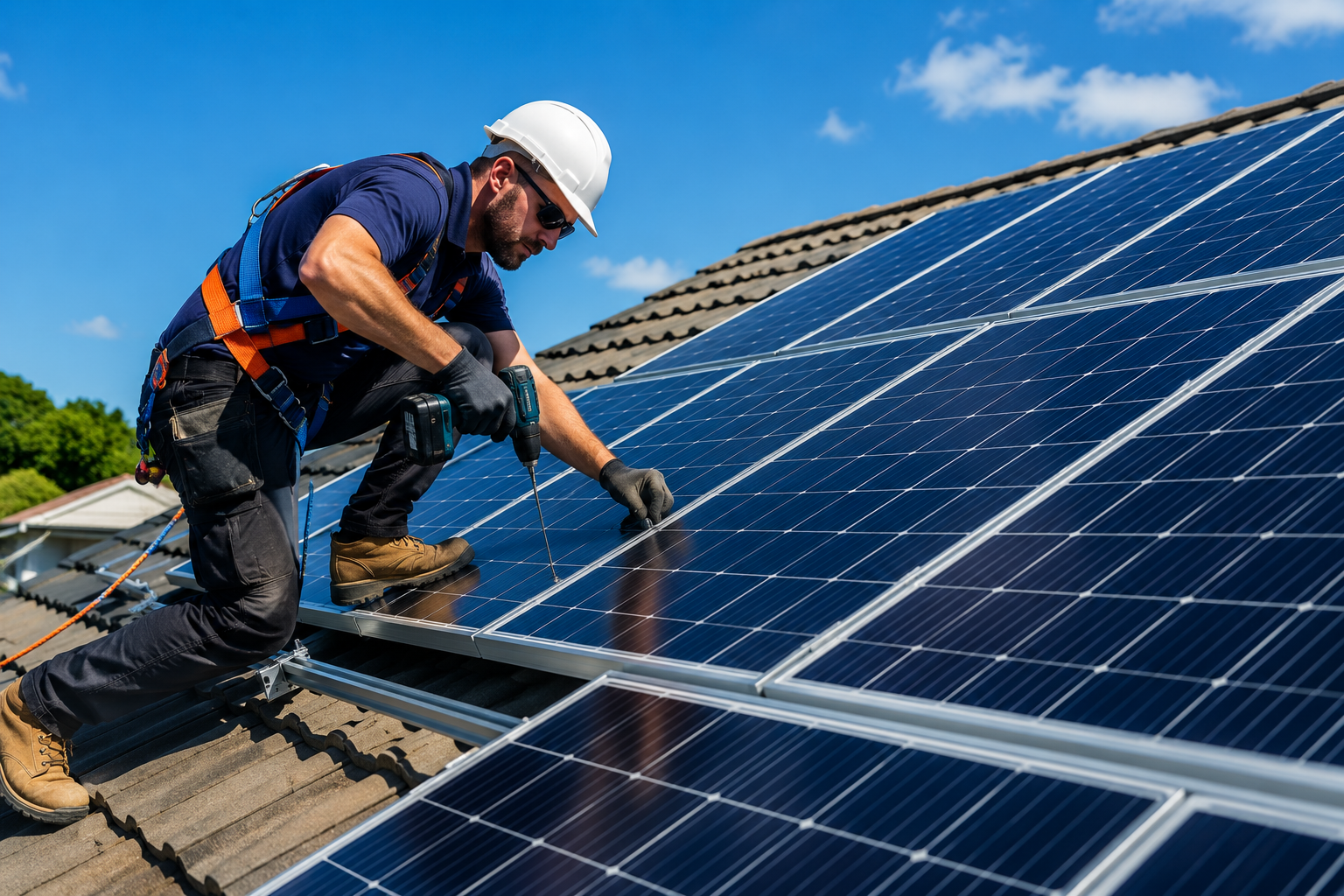
Why More UK Homes Are Choosing Solar
Solar panels help reduce reliance on the National Grid while lowering electricity bills and household carbon emissions. Many systems now include battery storage, enabling homeowners to store excess energy for evening use. Some installations can significantly improve energy independence and reduce exposure to rising energy prices.
Benefits of installing solar panels include:
Reduced electricity bills
Lower carbon footprint
Protection against future energy price increases
Potential earnings through the Smart Export Guarantee (SEG)
Increased property appeal and energy efficiency
Is Your Home Suitable for Solar Panels?
Not every property is identical, but many UK homes are suitable.
A roof is generally considered ideal when it has:
South, southeast, or southwest orientation
Minimal shading from trees or nearby buildings
Around 20m² or more of usable roof space
Structural integrity capable of supporting solar equipment
Roof pitch between roughly 10°–50° (flat roofs can also work)
Properties with EV chargers, heat pumps, or high daytime electricity usage often see faster returns from solar investment.
Do You Need Planning Permission?
In many cases, rooftop solar installations fall under permitted development rights, meaning separate planning permission is not required.
You may need approval if:
Your property is a listed building
Your home is in a conservation area and panels face public highways
You plan large ground-mounted systems
Specific local restrictions apply
Requirements vary by property type, so a professional assessment is recommended before installation.
Understanding MCS Certification
One of the most important things to check before choosing an installer is whether they are MCS certified.
MCS certification helps ensure:
Installation quality standards
Eligibility for Smart Export Guarantee payments
Access to insurance-backed warranties
Compliance with UK regulations
Working with accredited installers helps protect your investment long term.
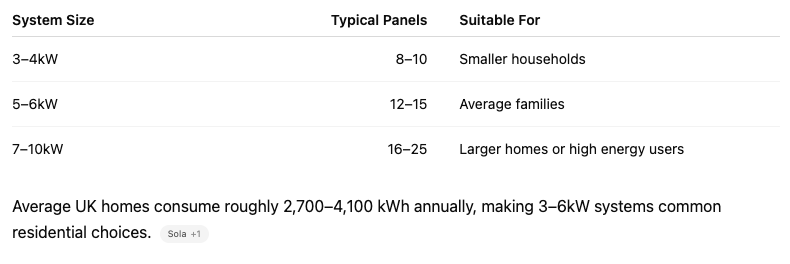
Typical Solar System Sizes for UK Homes
The right system depends on household energy consumption.
Approximate ranges:
What Happens During Solar Installation?
A standard installation process usually includes:
1. Initial Survey
Assessment of:
Roof suitability
Shading
Structural condition
Existing electrical systems
2. System Design & Quote
Installers create a bespoke design with projected energy generation and pricing.
3. Grid Approval (Where Required)
Some systems require Distribution Network Operator (DNO) approval before installation. Approval timelines vary.
4. Installation
The physical installation commonly takes 1–2 days for domestic systems.
5. Certification & Handover
Following commissioning, homeowners receive documentation including certification and warranty details.
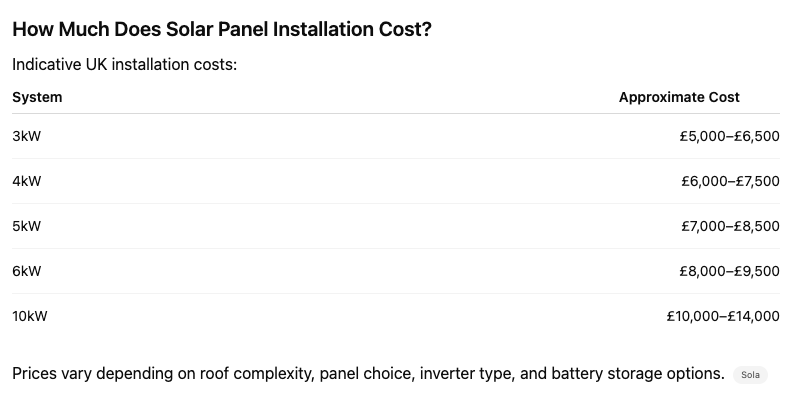
How Much Could You Save?
Savings depend on energy usage patterns and system size.
Examples cited for UK households:
4kW systems: approximately £800–£1,000/year
6kW systems: approximately £1,100–£1,400/year
Larger systems may save substantially more annually
Many installations achieve estimated payback periods of around 6–10 years while systems often carry warranties extending beyond 25 years.
Should You Add Battery Storage?
Battery storage allows homeowners to use solar-generated electricity after sunset.
Potential benefits:
Greater self-consumption
Backup power capability
Reduced grid dependence
Improved long-term savings
Battery systems are increasingly popular among households aiming for higher energy independence.
Choosing the Right Solar Installer
Before committing, ask installers:
Are you MCS certified?
What warranties are included?
Is workmanship insured?
Do you handle DNO applications?
What aftercare support is offered?
Industry experience and certification can be as important as upfront price.
Final Thoughts
Solar panel installation is becoming an increasingly attractive option for UK homeowners looking to reduce bills, improve energy independence, and lower environmental impact. While every property differs, understanding system sizing, certifications, installation timelines, and expected savings helps you make an informed decision.
At Green Guardians Solar, we support homeowners through every stage of the transition to renewable energy — from initial advice to professional installation.
Thinking about going solar? Contact Green Guardians Solar for expert guidance and a personalised assessment of your home’s solar potential.
